
By Paul Bouissac
A linguistic universal
Formal systems of pronouns are grammatical tools that are found in almost all languages. It is one of the four principal components used to probe the underlying patterns of variation among the linguistic features considered in the largest comparative grammatical database available (Grambank) that parsed 2,467 languages (Skirgard et al. 2023).
Descriptive grammars usually feature tables showing first-, second-, and third-person pronouns in the singular, dual (when applicable), and plural forms. They include several classes of distinct morphemes: those indicating the author of an utterance either as subject or object (reflexive); those used to address other participants in verbal exchanges; and those referring to persons, objects, or situations external to the interacting dyad, to which utterances refer. Depending on languages, some slots in the pronominal table have more than one morpheme. First, there may be different forms for the same function in languages that have grammatical genders such as masculine, feminine, and neutral. These distinctions may overlap in part with the biological gender of the interactants. In addition, some languages offer alternative morphemes for the same grammatical functions.
These grammatical tools are indeed used for other kinds of functions in the meaning-making process of social interactions such as acknowledging or denying differences in sex, age, class, or status, as well as indicating the degrees of intimacy that define the relationship between the interactants. Learning to use the “proper” pronouns in any language, either as a child or as a newcomer, is an important step toward becoming a full-fledged member of a particular culture or sub-culture.
Terminological issues
Those who have reflected on the theoretical grounds that justify the term “pronoun” to denote the grammatical functions of these morphemes have usually questioned the term’s literal meaning: “pro-noun” suggesting a morpheme whose purpose consists in standing for a noun in the course of utterances or textual processes. They argue that this defining feature may apply in some cases but is irrelevant in some others.As the authors of the first two chapters in this volume show, in the wake of other linguists (e.g., Benveniste 1971; Bhat 2005; Greenberg 1986), the very concept of pronoun needs to be redefined in view of the various functions these morphemes actually fulfill in discourse. However, irrespective of this terminological squabbling, the morphemes generally defined as “pronouns” have some common characteristics:they are short and they are synsemantic, i.e., contentless without verbal or textual contexts. This is why some linguists (e.g., Jespersen 1959 [1923]; Jakobson 1971 [1956]) have proposed to refer to these grammatical tools as “shifters”. They are, though, not meaningless as they are located at the sensitive interface between language and society. They never appear in isolation either in texts or in social interactions. They regulate spoken and written processes between individuals, and they ultimately represent the social structure that defines a particular culture by casting a net of categorical differences on the people engaged in all kinds of language interactions.
Pronominal systems: variations and resilience
The history of all documented languages shows that pronominal systems are prone to undergo changes over time under various societal and cultural pressures. However, the Grambank database shows that the variations of these systems over time are more constrained by genealogy (i.e., language family) than by geography (i.e., contact). Thus, the pronominal domain appears to be more conservative than, say, the domain of clause or noun. It is even possible to relate some pronouns to earlier acoustic, pre-linguistic signals (Bouissac 2018: 2-4). Both address and anaphoric pronouns, though, undergo general variations as all other functional parts of languages. These changes are symptoms of phonetic transformations and indicators of societal and cultural evolution. Since pronominal systems are subject to such flexibility, they may also be used deliberately as political instruments of societal engineering, as it is documented in several chapters in this book, either toward more egalitarian or more hierarchical societies. However, spoken languages have a dynamic of their own that tends to escape the power of human legislating. Written education can enforce new rules but all artificial constraints can eventually be transgressed through willful indiscipline, poetic creativity, or simply the uncontrollable forces of variations and imitations that keep shaping verbal expression.
All of the European languages examined in this volume bear witness to the fundamental pragmatic instability of pronominal systems across their documented history, irrespective of their language family. The focus on controversial contemporary issues, which, in some cases, could be dubbed a “pronoun war”, must be assessed in the wider context of language evolution, in particular the social dynamics of pronominal systems and their often profound impact on the whole social structure and its semiotic systems.
Methodological issues
Investigating the use of pronouns in actual spoken interactions is a methodological challenge. Some protocols have been developed such as questionnaires in which participants are asked which pronoun they use when addressing specific categories of people based on age, relatedness, social functions, and so on. For instance, the standard reference for this approach is found in Brown and Gilman’s landmark article on “The pronouns of power and solidarity” (1960). In the second section of their chapter, titled “Contemporary differences among French, Italian, and German”, they explain that the data they report were obtained from a number of mostly male students, native speakers from these countries, who were residents in Boston as guests of various academic institutions. In spite of the caveats that the authors voice regarding the limits of the value of their investigation – for instance, the presence of French students in a visiting program at an Ivy League university is probably a reliable class indicator – they extrapolate generalizations from the responses of a mere 50 students. Do these results reflect actual interactions, or do they indicate rather what uses are expected according to the norms of their native culture and social class? This kind of evidence is certainly relevant but similar to the judgment of grammaticality about made-up sentences that have often little resemblance with the actual utterances that occur in spontaneous spoken interactions. Some chapters in this volume rely in part on such questionnaires that are better designed and may yield more reliable conclusions than Brown and Gilman’s early inquiry.
Another, less controlled source of data that can be tapped in order to gather information on the spontaneous use of pronouns in actual spoken exchanges is found in live televised broadcasts, and, with a certain degree of authenticity, in films and novels that endeavor to portray realistic dialogues. Nowadays, written interactions through the social media also provide a window on the pragmatics of address pronouns across a wide array of social categories that are indicated by the level of spelling proficiency of the interactants. However, the most reliable data come from a reflexive approach to the direct experience of the researchers investigating their native language. Anecdotal evidence cannot be rejected off hand as being unscientific as it represents invaluable evidence concerning the sensitive interface between language and the social fabric of which we are active and reactive parts. Such direct experience provides additional precious information on the subtle intonation variables that create further meaning categories of uses. Indeed, only intonation can signal affects attached to pronoun uses such as the difference, in English, between “we” inclusive and “we” exclusive, and the degree of discrimination against the “others” (“they”, “them”) that may vary between neutral and aggressive tones. Ultimately, it could be claimed that language in live interactions is made up of singularities, that is, idiosyncratic, quirked responses that define situations on-the-go, like dancing on the edge of a curve. Unanticipated collapses of the social balance can have serious existential consequences. The rules we tend to extrapolate from these singularities are vulnerable to endogenic variations and exogenic imitations.
The fluidity of language
The pragmatics of pronominal uses and the rhetorical moves that are explored in this volume show that the dynamics of language and the social processes are intimately linked. Indeed, languages are not inert entities. Some go as far as characterizing language as a “liquid” medium (e.g. Shneider 2025). Languages are neither truly “isolates” nor immutable. Attempts to control them through the written medium and to codify them through normative grammars and exemplars are not foolproof. Diachronic linguistics offers irrefutable evidence that nothing can stop language change from generation to generation, still less so across centuries and millennia. The range of variations, though, remains under some cognitive and functional constraints. As the Grambank compellingly shows the remarkable flexibility and lability of languages have intrinsic limits. Observing the contemporary pragmatics of pronouns in a sample of languages provides ample evidence of the far-reaching effects of changes that may at first appear purely tactical. However, in languages such as French and German, in which all words in the lexicon are assigned distinct grammatical genders that command a complex system of agreements on the syntactic level, reforms that foreground the biological genders of the interactants necessarily interfere with the whole linguistic system and may trigger massive morphological and grammatical changes in the not-too-distant future. In some European countries, political moves bearing upon gender equality through linguistic changes cause tensions and conflicts between those who consider their national language as a symbol of their deep identity and those who advocate radical changes for the sake of justice and equality. From this point of view, scrutinizing the use and rhetoric of pronouns amounts to observing societies in transition and the conservative reactions that such processes prompt.
However, conceiving languages as self-contained entities seems to be in part a result of the 19th century emergence of nation states in Europe. Linguistic borders became so crucial that linguistic variances were construed as political deviances. The promotion of literacy was a tool of national integration through the normalization of the morphology, grammar, and pragmatics of the dominant language of the state at a time when universal education was legislated. This ingrained attitude toward language explains to a large extent the resistance encountered by language change initiatives that are experienced by many as undermining their very identity, if not the assumed, but fallacious transcendent nature of language itself. What could be dubbed the contemporary “wars of pronouns” are not mere political squabbles but may be felt, and feared as the harbingers of deep cultural revolutions. Several chapters in this book mention the increasing role of English as a lingua franca, mostly in Northern Europe, and its generalized use of the second person plural “you” as a universal address pronoun. This appears to be a welcome escape from the anxieties generated by the choice of pronouns in languages in which the choice among various forms crucially matters in the appropriate observance of the rules of social interactions. All languages that emerged in the world were undoubtedly always in contact with other languages. Trade, alliances, as well as hostilities and conquests, induced the creation of pragmatic ways of communicating through any kind of pidgin, creole, and lingua franca. More generally, the imitation and eventual borrowing of “foreign” words and their uses are more than ever a part of the dynamics of language in the context of globalization, a trend that is compounded by interaction-intensive and ever-expanding social media. Pronouns are front and center in those transformative processes.
Changing patterns, neologisms, and resistance
Probing the evolution of the pragmatics of pronominal systems opens a window on societies in transition. This volume documents and discusses this linguistic domain as an area of changes and contention in nine European languages, both from the Indo-European and Finno-Ugric families. The chapters variously deal with aspects of the effects of societal changes on the pragmatics of pronouns in these languages. Two main issues are identified as areas of variations and controversies: how address and reference norms are changing with time with respect to social relationships governed by rules of politeness and propriety, and how grammatical and biological genders collide when ideologies interfere with long-established grammatical norms that are irrelevant to what was generally considered to be natural categories. For instance, efforts to overcome the sexual binarism ingrained in Indo-European languages through the forms and functions of pronominal systems are often met with fierce resistance. The gender-blind pronouns of the Finno-Ugric languages discussed in this volume open up a different perspective while discussing some of the grammatical issues such pronominal systems generate for the phoric functions of pronouns.
New pronominal forms or new functions assigned to existing forms that are suggested or imposed for the sake of gender equality or neutrality, as well as a way of promoting social inclusiveness, are sometimes rather easily adopted when they are within the range of historical variations or are compatible with the phonological systems of the languages concerned. “They” and “them” used as all-purpose pronouns in English are a case in point. The specialization of these forms to express the plural is relatively recent (Fischietto 2016). “They”, now, can be recast as gender- and number-blind. “They” was even celebrated in 2015 as the “word of the year” (Marquis 2016). However, by contrast, the French neologisms “iel” and “iels” that were intended to erase the gender distinction conveyed by the traditional “il” (3rd – person singular masculine) and “elle” (3rd – person singular feminine), and the corresponding plural forms “ils” and “elles” (subject), and “eux” and “elles” (object) do not seem to fit well with the phonological system of the language, although any form can be “naturalized”, so to speak, with time, given the flexibility of any arbitrary conventions that depend on habit and functionality. Some solutions, like the one proposed for the third-person French pronouns, may appear simple and unambiguous in the graphic mode, but may create utmost confusion in the spoken language as the combination will lead to a sound like “yell” or “iil”.
Nevertheless, these new forms were included in a standard French dictionary online, Le Petit Robert, in 2021 (Greco 2021) in spite of the fact that the authoritativeAcadémie française [FrenchAcademy] had outlawed inclusive writing in 2017 as being an aberration, an attitude that persists among some French officials. For instance, Brigitte Macron, the President’s wife, took a forceful stand on this issue by stating publicly that “it is wrong to fiddle with the French language” (Le Monde, November 18, 2021).
These neologisms raise indeed some practical issues irrespective of their political justifications. In fact, it will be difficult to extend that innovation to the neuter “il” in expressions such as “il y a…” [there is], “il pleut” [it is raining], all the more so since it is usually realized phonetically as “I-” or “Y-”, e.g., “ya du vent” [it is windy] and “ya du sucre” [there is some sugar], or “il pleut > ipleut” [it is raining]. The gendered pronouns themselves “il” and “elle” are most often collapsed with the first phoneme of the verb they precede: “il vient > ivient” [he comes]. The pronouns in that position are often reduced to a brief glottal stop or marked by a mild aspiration.
Another domain of contention is the pragmatics of what is dubbed the T–V opposition (from “tu” and “vous” or “tu” and “voi” respectively in French and Italian) that is extended to their equivalents in other languages to express various degrees of closeness and status ranking in social relationships. In all the languages considered in this volume, the address systems are in a state of flux between a tendency to level social hierarchies and a conservative counter-drive to maintain signs of deference, a phenomenon that is well documented over the last one hundred years and more of political upheavals. Some languages offer alternations that allow one to escape difficult choices. Switching from the affiliative or alienating modes to their respective opposites can amount to “speech acts” aimed at modifying previously defined relationships among interactants. Likewise, the adoption or refusal of the new pronominal forms of address and reference with respect to genders generate tensions in both private and public discourses. The contemporary dynamics of the pronominal systems in most of The European languages that are probed in this volume indicate that deep transformative forces are at work. A new awareness of systemic gender discrimination through traditional pronoun uses compels individuals to self-monitor (and, occasionally, self-censor) spoken and written communication, with the emergence of guessing and repair strategies whenever possible pronominal “infelicities” are sensed. Emphatically abiding by the new norms or deliberately transgressing them amounts to declaring one’s political stand, thus, again using the choice of pronouns as a kind of “speech act”.
The same tension applies to the dynamics of address systems at a time when social relations are under various political pressures. Telling examples can be found in personal experiences as well as in daily news. In the early days of his administration, the French president Emanuel Macron – who had run a campaign as a young, progressive candidate – was asked by a boy: “Comment tu vas, Manu?” [How are you, Manu?” but the lack of T-V distinction in English makes the question untranslatable]. This breach of formality triggered an instant reply from the addressee: “Non. Il faut dire: Comment allez-vous, Monsieur le President?” [No. You must say: How are you Mister President?] This missed opportunity to live up to the candidate’s implicit promise to be different shows the strong resilience of the T-V address system in contemporary French as well as its incipient obsolescence, at least in some parts of the general population. Similar issues across the whole spectrum of the European languages that are probed in this volume combine with the linguistic impact of the “gender revolution” to put spoken and written interactions under stress.
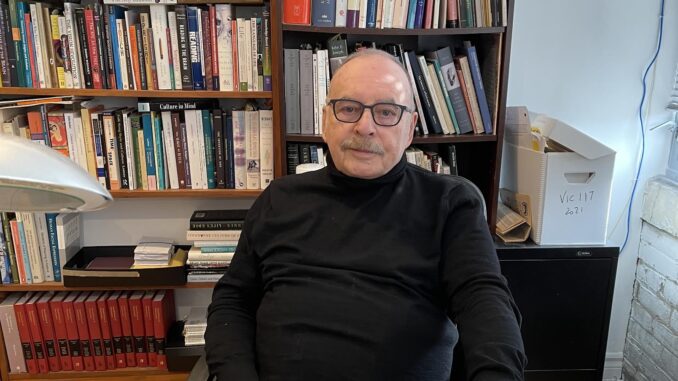
Paul Bouissac is Professor Emeritus at the University of Toronto (Victoria College). He is the editor of a forthcoming book on changing patterns in the pragmatics of nine European languages.
Be the first to comment